Summary
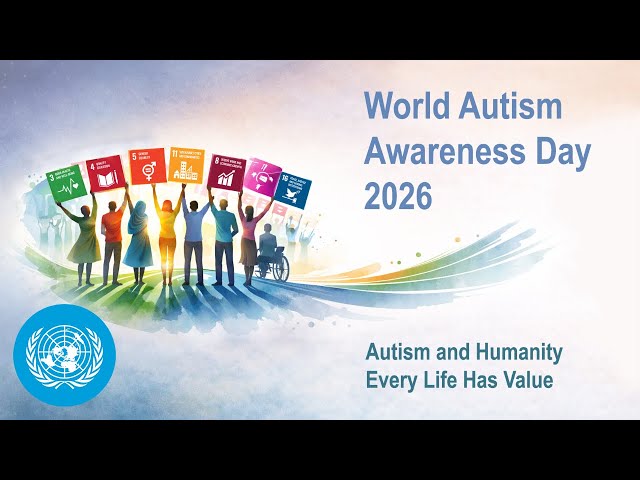
Today, World Autism Awareness Day will be observed under the theme “Autism and Humanity – Every Life Has Value”. The dignity and worth of people with autism must be included in our everyday life. Further, the principles of Human Rights being aligned with the United Nation’s Sustainable Development Goals (SDGs) underscore the inclusion of neurodiversity as critical to sustainable development. Exploration in the roles of neurodiversity in shaping policies that expand health and well-being, gender equality, economic opportunities, reduced inequalities and strengthen institutions are avenues towards an inclusive society for all.
AUTISM is a Neurological and developmental disorder, which affects the nerves, and is caused by genetic and environmental factors, which fuse to change developmental stages of the brain.
As a result, Autism Spectrum Disorder (ASD) affects how people interact with others, learn, communicate and behave. Other characteristics of this neurological and developmental disorder include problems in social interaction and limited and repetitive patterns of behavior, influenced by social change.
According to the World Health Organisation (WHO) 1 child in every 100 is autistic (WHO, 2022). There are notable efforts globally by leaders to help children affected by this disorder, so that they would be able to overcome their economic challenges and live a life of Dignity.
Globally, Autism is viewed as a prevalent disorder that children are born with. Because of this condition, adolescents lose their chances of experiencing the early stages of development since; symptoms appear during the first three months of the child’s life. Identifying autism is difficult before the age of 12 months, but diagnosis is generally possible by the age of 2 years.
Research has shown that Autism occurs more often in boys than girls, hence parents must become aware and alert, through sensitization sessions on early childhood challenges of development.
In Guyana, the Ministry of Education addresses screening of Special Education Needs Children, through the Regional Special Education Needs / Disability Diagnostic and Treatment Centre, Turkeyen, Georgetown. This unit, headed by Assistant Chief Education Officer with responsibility for (SEN) Dr. Keon Cheong, serves as a robust screening and diagnostic facility in region 4. Further, collaborations between this unit, and the other Special Education Needs Units in regions countrywide continue to be active and advanced.
The National Commission on Disability (NCD), remains the focal point on Disability in Guyana. Recorded statistics in the Commission’s database reveal Autism prevalence as follows: region 1- Barima Waini has a total of 67 cases. Region 2 – Pomeroon-Supenaam: has 2 recorded cases of Autism. Meanwhile, region 3 – Essequibo Islands-West Demerara: 34, region 4 – Demerara Mahaica: has a notable amount of 151 autism cases. Region 5 – Mahaica-Berbice: 9 recorded cases, region 6 – East Berbice-Corentyne has 15 cases of Autism. While region 7 – Cuyuni-Mazaruni has a total of 19 cases. Region 8 – Potaro-Siparuni has a total of 40 Autistic persons. Meanwhile, in region 9 – Upper Takutu – Upper Essequibo has a total of 27 Autistic persons and region 10 – Upper Demerara-Berbice has 18 recorded cases of Autism.
To date, the National Commission on Disability has a total of 387 recorded cases of Autistic persons living throughout the ten administrative regions.
As the National Commission on Disability (NCD) joins the world in this year’s Autism Awareness Day observance, let us support persons with Autism through recognizing the value of their lives and contributions.